Zechariah 12:1

"The Lord, who stretches out the heavens, who lays the foundation of the earth, and who forms the spirit of man within him, declares:" - Zechariah 12:1

Wednesday, May 20, 2020

Tanzania: Has President Magufuli forgotten Nyerere’s lessons?

 
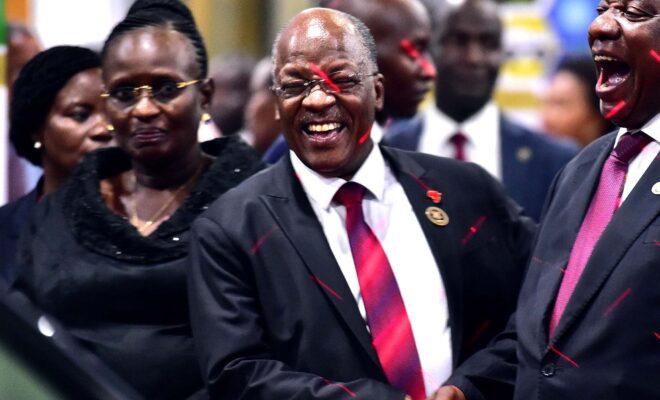
Magufuli Nyerere: President John Magufuli of Tanzania. Credit: GCIS.


The president seems to be repeating the mistakes of Tanzania’s independence leader rather than learning from his legacy.

I visited Tanzania last month for the first time in five years and for the first time since John Magufuli was elected president in 2015. I have been visiting the country regularly since 1976, living there for a year as a student in 1979 and for three years as a diplomat in 1993-6. I have followed its fortunes through the decades with close interest, meeting all its presidents (except the incumbent) at one time or another.
While I was there on this occasion, the journalist and African Arguments contributor Erick Kabendera was disappeared: that is, he was picked up by police and kept incommunicado for several days until he suddenly re-appeared in court and was improbably charged with economic crimes and tax evasion. This is not a lone incident: since 2015 it has become common for independent journalists to face harassment and even death, and for the government to obstruct news or even the publication of standard national statistics it dislikes. It is worrying both many Tanzanians and many of Tanzania’s friends overseas.
[I had to flee my home Tanzania for doing journalism. I was lucky.]
It is worth asking where this new trend has come from. Since independence in 1961, Tanzania has been a beacon of the liberation struggle in Africa and of peaceful political stability. The country’s moral and political compass was set very firmly by its first president, Mwalimu Julius Nyerere, whose picture still hangs on many government, hotel and shop walls alongside President Magufuli. All Nyerere’s successors have appealed to and pledged to uphold his legacy.

Nyerere’s legacy

So what is that legacy? Nyerere was relatively unusual among African presidents in that he left a substantial body of writings that set out his political thinking and which enable us to see its evolution. While sometimes intolerant of criticism, he tended to respond with argument rather than force. Nyerere’s thinking changed over time, his ideas adapting in the light of experience, but some elements remained unchanged: a powerful moral tone; an intolerance of corruption; a central role for the state but with a real accountability to the people; and, above all, the value of unity at the national level, in the union with Zanzibar, and across Africa as a whole.
Nyerere started as an unabashed African socialist. Capitalism and colonialism had gone hand-in-hand and destroyed many traditional communal values. These needed to be restored and Nyerere justified Tanzania’s one-party state as necessary for building national unity and avoiding political divisions. He also advocated ujamaa villagisation as a path to economic and social modernisation.
Over time, though, the president came to see the drawbacks of both policies. Although the ruling Chama Cha Mapinduzi (CCM) had robust internal competition and accountability, any single party that remains in power continually tends to become complacent and corrupt. The target tends to become climbing to the top of the party tree and reaping the benefits along the way rather than serving the people. Meanwhile, villagisation and state production proved socially disruptive and financially disastrous. Economically, Nyerere’s prescription just did not work.
In response, Nyerere did two things. Firstly, he put in place succession arrangements that allowed him to step back from running the government. Although he retained oversight as CCM chairman, he stepped down as president in 1985 and allowed his successors to liberalise both politics and the economy. In the 1990s, multi-party politics was re-introduced, a number of loss-making parastatals that were draining the government’s resources were privatised, and the country began to encourage outside investors. Nyerere’s personal interventions became increasingly rare, limited largely to upholding the sanctity and importance of the political union with Zanzibar and working for peace in neighbouring Burundi.
Nyerere’s legacy was to value unity but recognise diversity, not overstay his welcome, and be guided by principles but adapt his policies in the light of experience.
[Is Tanzania discarding Nyerere’s freedom-fighting legacy?]

Fulfilling or negating Nyerere’s legacy?

Like his predecessors, President Magufuli puts great emphasis on respecting Nyerere’s legacy. Selected at least in part for his well-known personal probity, he entered office breathing fire and fury against corruption in the state machine. His dramatic interventions appeared to shake state utilities out of their torpor and corrupt practices. He developed and delivered some basic infrastructure, including roads and energy. All of this was overdue.
But in other respects, Magufuli’s administration seems stuck in the early Nyerere-ite mode of suspicion, even hostility, to international capitalism and open markets even within its region. It has returned to preaching a narrow view of self-reliance similar to that which led the country to near bankruptcy in the early-1980s. In political terms, Magufuli seems have adopted an intolerance of criticism and opposition that Nyerere abandoned in his later years. CCM seems increasingly frightened of democracy, fearing that given a free choice and facts the people just might choose someone else.
To constrain the opposition and harass the free press will in the end destroy democracy and even the CCM itself. We have seen elsewhere political leaders deciding they should be the sole arbiter of decisions and stay on in charge long after their sell-by-date, presiding over ever-more corrupt and incompetent governments and leading their countries to wrack and ruin. In almost all cases, it does not end well. The same can apply to parties as to individual leaders.
Tanzania is a country of huge potential. It is rich in land, material resources and people. To make the best use of them for the benefit of its citizens, it must also be rich in wisdom as well as morals. As everywhere, these resources are best developed by a fruitful, harmonious and respectful cooperation between insiders and outsiders. There is competition, but it is best complemented by collaboration.
Tanzania has benefited greatly from regular political succession in its leadership, but it would be a betrayal, not a fulfilment, of Nyerere’s legacy to refuse the Tanzanian people a free and informed choice about the party and policies they want. Mwalimu would probably be angry as well as sad to think his successors had learnt the wrong lessons he was trying to teach them – that they preferred a closed to an open society and were looking to the past rather than the future.

This article was also published on the Royal African Society website.

Tanzania’s gamble: Anatomy of a totally novel coronavirus response

By Ben Taylor
 
https://africanarguments.org/2020/05/07/tanzania-gamble-anatomy-totally-novel-coronavirus-response/
tanzania coronavirus response


In contrast to most leaders, Magufuli’s main strategies are to limit information, treat fear as the main threat, and keep the economy running.

 
Chapter One of Tanzania’s experience with the COVID-19 pandemic came to an end in late April. The second half of that month had seen the number of confirmed cases rise to 480, up sharply from the 32 in mid-month. As I wrote at the time, the chance for early containment looked like it had already passed us by.
President John Magufuli had opted not to listen to the global scientific advice. Instead, he had put his trust – and the lives of millions – in the hands of God. And in some odd (and potentially dangerous) “scientific” thinking of his own. And in the belief, shared by some experts, that locking down cities such as Dar es Salaam might do more harm than good.
That was Chapter One. Chapter Two is now being written. And it is being written in the dark.

Are cases really much higher or…lower?

We no longer have any reliable estimates of the number of cases or deaths from COVID-19. According to the African Centres for Disease Control and Prevention, Tanzania has conducted just 652 tests (as of 7 May). This compares to over 26,000 tests conducted in Kenya and nearly 45,000 in Uganda. Tanzania’s number is so low it almost defies belief. Have more tests been done but the results not released? Or is this the true figure, in which case is it the result of staggering incompetence or shocking indifference to the potential suffering of millions?
For some years now, statistics and the media have been a highly charged political battleground in Tanzania. Controlling the narrative means silencing facts that contradict the official line. Someone suggests economic growth may not be as strong as the government claims? Charge them with sedition. Someone publishes data showing political leaders are not as popular as they once were? Strip them of their passport.
The COVID-19 numbers are no different. The government is giving updates only every week or so, and sometimes the new data doesn’t even include basic figures such as the number of new cases and deaths. In such a vacuum, widespread reports of night-time burials and people dying with coronavirus-like symptoms take on more than anecdotal credibility. Many understandably question whether the true number of cases and deaths is substantially higher than the official figures.
On the other hand, even President Magufuli seems to distrust the official numbers – though in the opposite direction. In a speech on 3 May, he accused unnamed imperialist foreign powers of sabotaging the national response by providing ineffective testing kits or buying off laboratory employees. He said he had sent “samples” from a pawpaw and goat for testing, with some producing positive results. Heads rolled at the national health laboratory.
In the same speech, the president also suggested international media organisations – the BBC was not named, but the implication was clear – have been deliberately spreading scare stories to undermine Tanzania while ignoring the extent of the outbreak in their home countries. He called this “another form of warfare”. (Incidentally, he had previously wondered aloud whether masks and disinfectant sprays might have been deliberately contaminated with the coronavirus.)
In short, nobody believes the official figures and nobody know how many cases we have. That ship has sailed. Local community transmission has been going on for weeks. We have no meaningful lockdown. And the process of testing, contact tracing and isolation can no longer cope. The true numbers could be anywhere between one thousand and one hundred thousand. Even within the Ministry of Health, in quiet corridors well away from both political bosses and media scrutiny, nobody really knows.

Four pillars of Magufuli’s approach

What else can we say about Chapter Two?
Well, the president has continued to infuse the national response with his own personal style. His pronouncements are watched keenly by the nation and followed closely by public servants. And those statements appear to be informed more by his own personal worldview than any input from scientists.
If the first strand of Magufuli’s approach is a tight control of information, the second is an emphasis on religious faith. Having previously argued the virus could not survive in the body of Jesus, the president again called for religious services to continue on 3 May. He concluded: “My fellow Tanzanians, stand firm. We have already won this war. God cannot abandon us, and our God loves us always.”
The third element of the president’s approach is to put a premium on the avoidance of fear. “Fear is a very bad thing,” he said. “There might well already be people in this situation who have been killed by fear. Let us put an end to fear. Let us defeat fear.” This is the logic that saw him criticise international media and young people online for scaremongering.
There is some truth in this perspective. Fear and stress bring genuine dangers. But the argument has limits. The point at which fear-avoidance means the government reports only on recoveries but not new cases or deaths, insists religious services should continue despite the risks of transmission, and asserts that God will protect us, it starts to look more like denial. And with potentially devastating consequences.
The fourth strand of Magufuli’s approach is a determination to keep the country and its economy going. Schools and universities have closed, sporting events remain suspended, and people are being encouraged to main distance from others and wear masks when out in public. But the president has strongly resisted calls to introduce any tighter lockdown measures. Instead, he has emphasised the importance of working hard, keeping the economy going strong, and maintaining a healthy supply of food and other goods.
This all adds up to something very different to the responses seen in other countries. Every context is different, of course, and the president has rightly warned against a copy-and-paste approach. But is Tanzania really so different? It is facing the same virus that has caused havoc and heartache elsewhere, and epidemiologists’ advice to Tanzania must surely be similar to that being offered in Kenya, Uganda and elsewhere.

Turning bullets into water

Only time will tell whether Magufuli’s gamble pays off. But we should be in no doubt that it is a huge gamble. The stakes are the lives and livelihoods of millions of Tanzanians. Two lessons from history illustrate this particularly keenly.
The first is the 1918 Spanish Flu. This pandemic hit Tanganyika hard and came hot on the heels of the First World War, which itself had had a devastating impact. There are no exact figures – sound familiar? – but it is estimated that half the country of 4.2 million people was infected and over 5% (over 200,000 people) died. At the same time in Zanzibar, authorities introduced stringent quarantine measures that limited the impact considerably.
The second may be even more relevant. In 1905, Kinjeketile Ngwale (also known as Bokero) persuaded his followers in southern parts of the country that a certain “medicine” – a mix of water, castor oil and millet seeds – would turn German bullets into water. Maybe he truly believed this. Maybe it was an attempt to inspire confidence and overcome fear. Either way, the gamble failed. The Maji-Maji Rebellion against German rule was a disaster. Once again, nobody knows the true death toll, but it is likely that tens thousands of soldiers were killed and as many as 250,000 civilians died of hunger. Kinjeketile was arrested and hanged in 1905, but the fighting continued. Later that year, Ngoni soldiers retreating from battle are reported to have thrown away their war medicine as they cried out “the maji is a lie!”
Suggestions that Tanzania has found a new Kinjeketile spread online this week.

Thursday, March 13, 2014

From Anne Frank to Hello Kitty - Norihiro Kato

NYT - The Opinion Pages 
MARCH 12, 2014

TOKYO — In late February, officials from city libraries contacted the police after discovering that hundreds of copies of “Anne Frank: The Diary of a Young Girl” had been defaced. Media reports included an awful picture: a torn photograph of the girl smiling in a mutilated book. No culprit has been identified, but the rash of vandalism seemed to begin around the time, in January, that a member of the ultranationalist group Zaitokukai marched in a rally with a Nazi flag over his shoulders.

The invocation of Nazi symbols by Japanese right-wingers is a new phenomenon. During the Cold War they focused their hatred on the U.S.S.R. and communism; now, they have shifted their attention to China, South Korea and, increasingly, the United States. Brandishing the flag of Japan’s wartime ally is a roundabout way for right-wingers to laud Japan’s imperialist past. Presumably, the defacement of those copies of Anne Frank’s diary was an expression of the same sentiment.

In my view, it was also a symptom of something broader. Over the past few decades, Japan has developed a mechanism to avoid facing up to its wartime history: It has neutralized issues that are too painful to deal with by rendering them purely aesthetic, and harmless — by making them “cute.” But that strategy no longer seems to be working.

The word kawaii, meaning cute or adorable, became central to a certain strand of Japanese culture in the 1980s, as changes in the social and political climate stripped conventional father figures of the authority they had possessed until the 1960s. Cuteifying something was a way of making oneself its protector, rendering it powerless in a nonadversarial manner. One famous example took place in 1988, when high-school girls reportedly remarked that the dying Hirohito was kawaii, making a nonissue of his responsibility for the war. Hello Kitty, the white cat with a pink bow on her ear, is the ultimate embodiment of Japan’s cute culture: She has no background and no mouth. She represents the impulse to escape history and to stop talking about it.

A few years ago, I published an essay called “Goodbye Godzilla, Hello Kitty” in which I argued that Godzilla was a symbol of Japan’s war dead who were returning to vent their rage at having been forgotten. When he was first created in 1954, Godzilla was frightening: He rose from the sea and, following roughly the same path as the B-29s that had firebombed the city in 1945, destroyed a Tokyo that was only just being rebuilt. But over the course of 50 years and 28 films, Godzilla first became just another monster and then he was domesticated — cast as a comical, doting father. In a word, he was cuteified.

Japan has also cuteified Anne Frank.

In January, the Israeli newspaper Haaretz ran an article exploring Anne Frank’s popularity in Japan. It drew on an interview with Alain Lewkowicz, a French journalist and the creator of an interactive iPad app called “Anne Frank in the Land of Manga,” a comic strip laden with photographs and interviews. Anne Frank’s story is unusually popular in Japan. But instead of being known for her denunciation of the Holocaust or the warning she offers against racism, Mr. Lewkowicz argues that, in Japan, Anne Frank “symbolizes the ultimate World War II victim” and that most Japanese see themselves that way, too, because of the American atomic bomb attacks on Hiroshima and Nagasaki. Japan is a victim, he contends, “never a perpetrator.”

Mr. Lewkowicz suggests that the Japanese can share this “kinship of victims” with European Jews because so many people, especially the young, are astonishingly ignorant of Japan’s actions during World War II. As Mr. Lewkowicz put it to Haaretz, they “don’t think of the countless Anne Franks their troops created in Korea and China during the same years.”

I find this argument persuasive. But there’s more going on here. Anne Frank’s reception in Japan is another instance of the cuteification of unresolved issues from the war. As the Haaretz article noted, Anne Frank’s diary became unusually popular in Japan not only through translations of the book itself but also through at least four manga versions and three animated films that tell the story of a girl every bit as cute as Hello Kitty.

Thus the recent defacement of all those copies of Anne Frank’s diary in Tokyo libraries may indicate that Japan’s culture of cuteness has reached the limits of its effectiveness.

The contradictions Japanese society has harbored since its defeat in World War II have grown too deep to ignore. A sense of nihilism is spreading as people finally realize that Japan’s dependence on the United States may never end and that reasonable political solutions to the country’s problems are not forthcoming. The reactionary policies of the administration of Shinzo Abe have exacerbated the sense that Japan’s democracy isn’t functioning. All the things we don’t want to see are suddenly forcing themselves into view.

If there is anything good to be said about that ugly bit of vandalism against Anne Frank’s diary, it’s that it might push Japanese society to say goodbye to all that cuteness and hello to the real history of Anne Frank and her countless sisters.

Norihiro Kato is a literary scholar and a professor at Waseda University. This article was translated by Michael Emmerich from the Japanese.

Tuesday, February 4, 2014

Translation by Journalist

South Korea's Underground Seat Fight

JAN. 29, 2014
Young-Ha Kim

BUSAN, South Korea — Last September, a 55-year-old man lit some scrap paper on fire and threw it into a Seoul subway car as he left the train. He had just been cursed at and kicked by senior citizens for sitting in a seat designated for “the elderly and the infirm.”

The man, whom we know only by his surname of Kim, was sentenced on Jan. 14 by a Seoul court to one year and six months in prison. One news article reporting the results of his trial garnered more than 1,000 comments in just one day, most of which were from sympathetic younger people complaining about being forced to give up their seats on the subway to senior citizens. Mr. Kim is hardly young, but his frustration resonated with the younger generations.

The Seoul subway’s designated-seating section has become a curious backdrop of intergenerational conflict in South Korea. In the 40 years or so since full-scale industrialization began, the social divide between generations has widened. Senior citizens grew up during Japanese occupation and the Korean War, and lived through the era of breakneck economic growth that followed, building a modern country from the ground up in just a few decades, most of the time under a military dictatorship. Most younger South Koreans have come of age in a time of relative affluence and freedom, and like many younger people in East Asia, have gradually become more independent-minded than their elders and less attached to the traditional Confucian values that have been the basis of Korean society for centuries.

In recent years, South Korea’s economic woes have put strain on both groups, and frustrations are high. Older South Koreans are finding themselves financially unprepared for retirement, while younger people can’t find jobs. The Seoul subway is a rare place where the generations cross paths — and the intergenerational tensions are playing out in the crowded trains.

South Korea is one of the world’s most rapidly aging countries. It is expected to become an “aged society,” according to the United Nations’ definition of 14 percent of the population above age 65, in four years. South Korea also has the third lowest birthrate in the world.

The country’s elderly spent their lives assuming their children would care for them in old age and did little to prepare for retirement. But their children don’t appear to be fulfilling their end of the bargain — and now the elderly are not faring well economically. The relative poverty rate among senior citizens in South Korea is 49.3 percent, the highest of the industrialized countries. Public pensions tend to be small. And the suicide rate for senior citizens, surely an indicator of economic strain, is the highest among the industrialized countries, at about 80 for every 100,000 people.

Meanwhile, South Korea’s younger people are facing unemployment not seen since the early 1980s. More than half of the country’s college-educated youth in their 20s remains unemployed or has stopped searching for work.

The notoriously congested Seoul Metropolitan Subway, which opened in 1974 and covers a total of some 200 miles, transports an average of 7 million passengers per day, which is more than twice the daily average of London’s Tube. For years, “pushmen” were employed at busy stations to stuff hundreds of extra passengers into each train. In 2008, the subway switched to employing “cutmen” instead, who prevent people from boarding cars once they are full.

At both ends of each subway car, 12 seats are set aside for “the elderly and the infirm.” As the name suggests, these seats are intended for senior citizens as well as for the handicapped and pregnant women, but in practice they are mostly occupied by the elderly.

According to the Seoul Metropolitan Subway authorities, there was a sharp increase in the number of complaints over the seats, from 252 in 2009 to 536 in 2011 (the latest year for which statistics are available). Anecdotal evidence suggests the trend has continued.

About two years ago, I had unintentionally sat in one of the elderly-designated seats on the subway and was checking my email when I looked up to meet the eyes of a scowling elderly man. I got up right away. He didn’t thank me, but continued to stare at me from across the train. There had been other free seats for him to use, but he pressured me to get up just to make the point that I shouldn’t have been sitting there.

All subway lines in South Korea are free for those over 65 years of age, so most elderly people use it whenever possible. There was a time when young people were happy to give up their seats for the elderly. And the elderly, fitting to tradition, have always assumed they had a right to a seat occupied by a younger person. But young people today are simply less deferential to their elders.

The fighting over seats mirrors a vast political gap outside the subway. A majority of older Koreans support President Park Geun-hye and the governing party, but the younger generation is strongly opposed to her leadership. Many older people feel nostalgia for the days of Park Chung-hee, the current president’s father, when they were more prosperous and the country was in the throes of exciting development.

For now, South Korea’s intergenerational conflict seems limited to the underground. But without a meaningful dialogue on how to help both our struggling elderly and disaffected young people, the tensions will find a way of rising to the surface.

Young-ha Kim is a novelist and short-story writer. This article was translated by Sora Kim-Russel from the Korean.

Monday, January 13, 2014

SG Ban Ki-moon Article: JFK left indelible imprint on me

UN Secretary-General: JFK left indelible imprint on me

USA Today (US)
22 November 2013
By Ban Ki-moon


Meeting the president as a youth led to my decision to choose a life of public service.
One of my great personal regrets is not having better preserved the autograph I received from President Kennedy when I had the overwhelming good fortune to meet him as a nameless teenager from a dusty village in Korea.
I was in the United States as part of an eye-opening tour organized by the Red Cross for a group of young people from around the world. It was more than a visit to a foreign country -- it was a pilgrimage to the land of possibility, a shining democracy that had helped to save my nation in its darkest hour.
President Kennedy's signature was quickly dispersed among the many fingerprints of my friends who grabbed at the glossy White House Bulletin and passed it around with such eagerness that by the time it returned to me no trace of his writing remained. But nothing could remove the imprint the American president made on my life. Meeting him was a turning point. His words that day on the South Lawn sparked my decision to become a diplomat and dedicate myself to public service.
As he looked out at our diverse group representing countries that were then on different sides of the Iron Curtain, President Kennedy reminded us that we could be friends even if our governments were not. And he said the words I chose to live by: "There are no national boundaries; there is only a question of whether we can extend a helping hand."
As I grew older and progressed through my career in national diplomatic service, that idea came into sharper focus, and I resolved to contribute to the global public good. As secretary-general of the United Nations, I try my best to serve the peoples of the world in whose name the organization's charter was adopted.
President Kennedy had great faith in the United Nations. His last speech to the General Assembly just weeks before his death reads like a primer for addressing the problems that still plague us today. He stressed the indivisibility of human rights. He opposed wasteful military spending. He called for racial and religious tolerance. He praised United Nations peacekeeping. And he insisted that we embrace peace not only on paper, but in our hearts. These are all values I defend along with a corps of dedicated United Nations staff members around the world.
In my own encounters with the world's young people, I try to deliver the message that JFK gave to me: Be a global citizen and love your country by serving the world.

Ban  Ki-moon is the Secretary-General of the United Nations

SG Ban Ki-moon Article: Welcoming America inspired my public service

Welcoming America inspired my public service

USA Today (US)
22 August 2012
By Ban Ki-moon


As secretary-general of the United Nations, I have more stamps in my passport than I can count, but there is none that I treasure as much as the first one.
"United States of America," it said. The date: August 1962. I was a wide-eyed 18-year-old from a rural village in war-shattered Korea. The American Red Cross had invited me to join 112 teenagers from 42 countries to travel across the United States visiting Red Cross chapters, meet each other and learn the value of service. It was an incredible privilege.
As soon as I stepped off the plane, I was overwhelmed by the warmth of the people. The wealth and plenty was a cultural shock to a very poor boy from devastated Korea. But what moved me most was the spirit of helping others I witnessed from small-town America to the capital.
We met President John F. Kennedy in the Rose Garden. He noted that we came from countries where the governments may not get along, but people do. He said he placed great hopes in us. It was at that moment that I resolved to embark on a life of public service. That journey that began 50 years ago continues to this day at the United Nations.
Half a century later, the importance of reaching out across boundaries to help others is more critical than ever. In this digital age, where people can connect with a click, everyone has the potential to make a difference.
Earlier this month, I had the opportunity to meet Beyoncé Knowles. She is well-known as a singer, actress and all-around superstar, but I met a global humanitarian lending her spotlight to the work of the United Nations. Her song, "I Was Here," is dedicated to World Humanitarian Day, an occasion to pay tribute to those who have given their lives for the cause and to support those who carry out vital, life-saving work around the world.
This year, we launched a campaign for people to take action. Across generations and continents, they replied with initiatives to help those in need.
Thanks to the immense power of social media, these acts of service were shared globally, inspiring countless others to carry out their own good deeds.
It was a clear reminder of the lesson I first learned 50 years ago and still live by today: Engaging in the world is the best path to a better future.
Individual acts of service may seem small, but each reverberates far beyond the people who are directly affected, generating a momentum that builds to protect our world.
At a time when extremists are exploiting national, racial and religious differences in new deadly ways, we must never forget the importance of our common humanity.
The United Nations is addressing global challenges such as insecurity, injustice and inequality. We succeed to the extent that this spirit of human solidarity is understood and practiced by governments and peoples. And we depend on our partners, such as the International Red Cross and Red Crescent movement, which share our common values and brave danger to uphold them.
In many cases, the Red Cross is the last hope in the most hazardous, conflict-stricken areas where even U.N. humanitarian workers cannot travel.
Today, the United Nations and the Syrian Arab Red Crescent are working together to bring aid to the suffering people of Syria.
In crisis spots around the world, we work together to save lives, protect human rights and promote dignity.
My own 50-year journey will come full circle this month as that original international group of Red Cross student leaders gathers together for a reunion. With all the changes we have experienced, President Kennedy's words to us remain as true as when we first heard them: "There are no national boundaries; there is only a question of whether we can extend a helping hand."

Ban  Ki-moon is the Secretary-General of the United Nations

Monday, January 6, 2014

The Interview With God Poem

The Interview With God
 
I dreamed I had an interview with God.

“So you would like to interview me?” God asked.

“If you have the time” I said.

God smiled. “My time is eternity.”
“What questions do you have in mind for me?”

“What surprises you most about humankind?”

God answered...
“That they get bored with childhood,
they rush to grow up, and then
long to be children again.”

“That they lose their health to make money...
and then lose their money to restore their health.”

“That by thinking anxiously about the future,
they forget the present,
such that they live in neither
the present nor the future.”

"That they live as if they will never die,
and die as though they had never lived.”

God’s hand took mine
and we were silent for a while.

And then I asked...
“As a parent, what are some of life’s lessons
you want your children to learn?”

“To learn they cannot make anyone
love them. All they can do
is let themselves be loved.”

“To learn that it is not good
to compare themselves to others.”

“To learn to forgive
by practicing forgiveness.”

“To learn that it only takes a few seconds
to open profound wounds in those they love,
and it can take many years to heal them.”

“To learn that a rich person
is not one who has the most,
but is one who needs the least.”

“To learn that there are people
who love them dearly,
but simply have not yet learned
how to express or show their feelings.”

“To learn that two people can
look at the same thing
and see it differently.”

“To learn that it is not enough that they
forgive one another, but they must also forgive themselves.”

"Thank you for your time," I said humbly.

"Is there anything else
you would like your children to know?"

God smiled and said,
“Just know that I am here... always.”

-author unknown

Tuesday, August 20, 2013

U.N.'s first official hearing on North Korean human rights abuse cases


The New York Times


August 20, 2013

North Korean Defectors Tell U.N. Panel of Prison Camp Abuses


SEOUL, South Korea — Shin Dong-hyuk said his earliest memory of life in a North Korean prison camp was the public execution that inmates were forced to watch when he was 5 years old. Inmates, he told a hushed audience here in Seoul on Tuesday, were so hungry that they devoured live rats and the raw hooves of a goat that prison guards had thrown away after slaughtering the animal.
One 7-year-old girl was clubbed to death for stealing a few grains of wheat, Mr. Shin said. He said he felt lucky when a warden ordered the tip of his finger chopped off, rather than having him executed, for damaging a piece of sewing equipment.
“We toiled as bid and ate what they gave us, we took their beating and starved when they didn’t give us anything,” said Mr. Shin, 31, who escaped the camp in 2005. “We were expendables they were keeping as beasts of labor, to get the most out of us before we die.”
Mr. Shin’s account on Tuesday was dramatic, but not particularly new; over the years, defectors from North Korea, including a handful of survivors of its prison camps like Mr. Shin, have told similar stories in interviews, at human rights conferences and in documentaries and memoirs. What made the accounts given by Mr. Shin and another defector unusual was their audience: the first United Nations panel established to investigate allegations of human rights violations by the North Korean government.
The three-member Commission of Inquiry was started by the United Nations Human Rights Council in March with a one-year mandate to investigate what the council called allegations of “systematic, widespread and grave violations of human rights,” including possible crimes against humanity, by the North Korean authorities.
The panel began five days of public hearings on Tuesday at Yonsei University in Seoul. It hoped to interview 30 North Korean defectors, including some who fled the country only recently. Later this month, another round of hearings is scheduled for Japan, where the fate of Japanese citizens abducted and taken to North Korea decades ago remains a keen concern.
“The panel decided to take public testimony to help raise international awareness of conditions in the country and because of a lack of response so far by the Pyongyang government” to repeated requests to visit North Korea, said Michael Donald Kirby, chairman of the commission. North Korea also has not responded to an invitation to attend the hearings, Mr. Kirby said.
The panel’s work is the international community’s most direct challenge to the young North Korean leader, Kim Jong-un, over his country’s human rights record, which rights groups describe as appalling. It also represents a victory for North Korean defectors, many of whom, like Mr. Shin, have become vocal campaigners for human rights in the North, arguing that international preoccupation with the North’s missile and nuclear weapons programs should not divert attention from the people living under one of the most repressive systems in the world.
North Korea denies violating human rights and has rejected United Nations resolutions calling for better treatment of its people as a “political plot” to destabilize its government.
In a joint letter delivered to the panel on Tuesday, groups of North Korean defectors, including one called Free the NK Gulag, said they hoped that the inquiry would lead to the indictment of “Kim Jong-un and his clique” in the International Criminal Court.
“We ourselves or our family members were dragged into prisons without trial, we suffered unspeakable torture and humiliation when we were caught while trying to flee North Korea, and we had to witness neighbors and relatives dying while waiting for food rations,” their statement said. “We were forced to witness almost monthly public executions. Because of our grandfathers’ background, many of us were deprived of an opportunity to join the party or get jobs.”
Jee Heon-a, 34, the other defector who testified on Tuesday, said that during a famine in the late 1990s, North Korean women were sold to traffickers in China. Those later caught by the Chinese police were repatriated to the North. Many suffered forced miscarriages through beatings and other forms of torture from North Korean guards at detention facilities, and one woman who gave birth was forced to drown her baby, she said.
Mr. Kirby said his panel would “seek to determine whether crimes against humanity have occurred and who bears responsibility.” But he cautioned, “It is not possible at this moment to envisage the level of detail that the commission will be able to achieve in establishing lines of responsibility, if any.”
There was poignancy in the fact that Tuesday’s hearing was being held in South Korea. Here, North Korean human rights concerns have never elicited the kind of fervent activism seen in the days when South Koreans fought for their own rights under military dictatorships. Until recently, the authorities here feared that without an effective means of pressuring North Korea, openly challenging the North on human rights would only make it more repressive and less willing to engage in international efforts to denuclearize the country.
Mr. Shin, whose stories of his life in the North Korean labor camp — including watching his mother and brother be executed — are chronicled in the book “Escape from Camp 14” by Blaine Harden, said Tuesday that he had met people who questioned the veracity of his testimonies. He said he had no evidence except his accounts and the scars that he suffered from torture and from an electrified fence that he crossed to escape the camp.
“I want to speak for those children who were born and live in prison camps as I did, and for people who don’t even know what human rights are,” he said. “I hope that they can say they are hungry when they are hungry and say it’s painful if someone hurts them.”
The commission has identified nine suspected patterns of human rights violations to investigate, including denial of food, arbitrary detention and torture.
In its 2013 white paper on human rights in North Korea, the government-run Korea Institute for National Unification in Seoul said between 80,000 and 120,000 political prisoners were held in five prison camps. Inside, “many inmates end up losing their life,” the paper said, because of “forced labor, torture, degrading mistreatment, poor nutrition and lack of medical care.” North Korea denies that such camps exist.
Also on Tuesday, the president of the international Red Cross, Peter Maurer, arrived in Pyongyang, North Korea, for the start of a visit to both countries, the organization said. Among the issues he will address in meetings with government officials will be the reunification of families who remain separated by the Korean War.
North Korea on Sunday accepted a South Korean proposal to discuss the reunion of elderly relatives.

Thursday, May 23, 2013

위대하지 않지만 위대한 『위대한 개츠비』, 번역가 김석희

영화 《위대한 개츠비》는 극장가에 바람을 일으키고, 서점가는 스콧 피츠제럴드의 원작 『위대한 개츠비』로 들썩이고 있다. 고전문학작품으로는 흔치 않게 베스트셀러 차트에 진입하고, 영화 개봉을 즈음해 수많은 번역본들이 쏟아져 나오고 있다.
 
90년 전에 출간되었던 책이 지금 이렇게 많은 사랑을 받는 이유는 무엇일까? 『위대한 개츠비』의 번역가이자 『로마인 이야기』, 『프랑스 중위의 여자』, 『모비딕』 등 까다로운 원작의 맛을 살리는 유려한 번역으로 유명한 김석희에게  『위대한 개츠비』의 매력과 번역 뒷이야기를 들어봤다.
 
 
『위대한 개츠비』에 대한 간단한 소개를 먼저 듣고 싶다.
『위대한 개츠비』는 스콧 피츠제럴드라는 미국 작가가 쓴 장편 소설이다. 1920년대라는 시대적 배경 속에서, 개츠비라는 한 남자가 성공과 부를 얻고 사랑하는 여자까지 차지하려고 발버둥치다가 허망하게 죽음을 맞게 되는 이야기를 담고 있다. 고전(古典)은 어렵기 때문에 고전(苦戰)이라는 우스개도 있지만, 이 소설은 청소년도 즐겨 읽을 만큼 평이한데도 ‘20세기 100대 영문소설’로 선정될 만큼 뛰어난 작품이다.
 
부끄럽지만 이번에 『위대한 개츠비』를 처음 읽었다. 그런데 정말 어렵지가 않더라.
『위대한 개츠비』의 스토리는 어려운 게 없다. 내용도 연애, 졸부들, 화려한 파티, 치정극과 살인까지, 이것만 보면 완전히 통속소설이다. 하지만 통속소설을 벗어난 작품을 썼다는 것이 바로 피츠제럴드의 문학성이다.
 
세간의 베스트셀러 작품은 대부분 문학 외적 흥미나 시대성만으로 화제가 되었다가 곧 사라져버린다. 반면에 예술작품으로 높은 평판을 얻은 소설은 반드시 시대성과 영원성의 교차점에서 창조된다. 『위대한 개츠비』도 바로 그런 작품이다. 이 소설은 1920년대 미국이라는 시대성을 그리면서 그 안에 인간의 욕망과 좌절이라는 영원성을 담고 있다. 말하자면 시대성에서 영원성을 이끌어내고, 그 영원성 덕분에 언제 다시 읽어도 신선하다. 그게 고전의 매력이다.
  
저자인 스콧 피츠제럴드에 대해서도 설명이 필요할 것 같다.
피츠제럴드는 천부적으로 문학적 재능을 타고난 작가다. 소년 시절부터 1차 대전에 참전해 군대에 있을 때에도 꾸준히 글을 쓸 정도로 문학적 열정과 자부심도 높았다. 하지만 24살에 발표한 첫 장편 『낙원의 이편』의 성공으로 갑자기 유명인이 되면서 유명세에 휘둘리고 또 아내를 제대로 못 만나서 그 재능을 제대로 발휘할 기회를 갖지 못했던 것이다.
 
피츠제럴드의 삶을 개츠비에게서 발견할 수 있다.
『위대한 개츠비』는 자전적 소설이라고 해도 좋을 만큼 작가의 삶과 행태가 투영되어 있다. 그럴 수밖에 없는 것이, 피츠제럴드 자신이 체험하거나 관찰할 것을 토대로 작품을 쓰는 타입의 작가였다. 이 작품을 구상했을 때, 그는 작품의 무대이자 배경인 롱아일랜드의 흥청망청한 생활에 빠져 있었다. 그리고 『위대한 개츠비』의 집필에 들어가면서 그런 생활 방식에 대한 반성과 회의, 새로운 환경에 대한 동경 같은 것이 그의 등을 떠밀기 시작했고 결국 롱아일랜드를 떠나 대서양을 건너 유럽으로 갈 수 밖에 없었던 것이다. 이렇게 공간적 거리를 확보하고 나자, 원래는 자신의 분신이었던 개츠비에 대해서 관찰자로서의 객관적 시선을 보낼 수 있었고, 개츠비를 자기 자신이 아닌 다른 인물로 그려낼 수 있었다.
 
피츠제럴드는 자신에게서 개츠비를, 즉 출세했지만 천박한 속물을 보았다. 그런 개츠비와 결별하려면 어떻게 해야할까. 죽일 수 밖에 없다. 작가가 소설 속 주인공을 죽이는 것은 두 가지 경우 때문이다. 질투와 증오. 피츠제럴드가 개츠비를 죽인 건 두 가지 모두 때문일 것이다. 개츠비가 죽어야만 작가인 피츠제럴드 자신은 구원받고 살아남을 수 있으니까.
 
그러나 피츠제럴드는 재기하는데 실패했다. 개츠비는 죽었지만 개츠비보다 더한 속물인 데이지, 그 데이지보다 더 속물인 아내 젤다가 그를 붙잡고 놓아주지 않았던 것이다. 화려한 삶을 살고 싶어한 젤다는 피츠제럴드에게는 끊임없이 돈을 벌라고 재촉했고, 피츠제럴드는 깊이있는 작품보다는 돈이 되는 단편소설들을 써내며 재능을 고갈시키고 결국은 삶의 에너지도 고갈되어 44세라는 한창 나이에 일찍 삶을 마감하게 된다.
 
영화 《위대한 개츠비》(1974)와 《위대한 개츠비》(2013)
 
『위대한 개츠비』는 지금에야 20세기의 고전으로 인정받지만, 막상 출간 당시에는 완전히 묻혀버렸다고 들었다.
1925년에 초판으로 2만부를 찍고 곧 8천부를 증쇄했는데, 작가가 죽었을 때(1940년)까지 재고가 2만부 쌓여있었다고 한다. 당시에는 『위대한 개츠비』에 담긴 비극성은 무시되고 시대성만 부각되었던 것 같다. 『낙원의 이편』을 읽고 열광한 독자들은 아직도 그에게 비슷한 후속작을 기대했다는 것, 피츠제럴드는 아직 서른도 안된 젊은이였고 그래서 그에게 고전다운 걸작을 기대하는 사람이 없었다는 것, 그런데 그는 ‘예술적 성취를 이룬 획기적인 작품’을 쓰겠다는 야심을 품고 있었다는 것, 그래서 생긴 괴리 때문에 『위대한 개츠비』는 시대를 거역한, 그래서 시대를 앞선 소설이 되었고, 젊은 독자층에게는 당시 그 내용이 어렵게 느껴졌을 것이다.
 
『위대한 개츠비』가 다시 재평가 받게 된 배경도 궁금하다.
피츠제럴드에 대해서는 지금도 평가가 엇갈린다. 학계나 진지한 평단에서는 동시대 작가인 헤밍웨이, 윌리엄 포크너보다 한 수 아래로 보는 게 보통이다. 작품의 주제의식이 깊지 못하다는 평가와 관련이 있는데, 미국에서는 『호밀밭의 파수꾼』 같은 청소년 소설로 평가되기도 한다. 하지만 문학이 전공자들의 전유물도 아니고, 또 독자 없는 작품이 존재 가치가 있겠는가. 문학의 성패를 누가 판단하느냐란 문제까지 들어가면 굉장히 복잡해지지만 연구자나 평론자가 논문을 많이 써낸다고 더 좋은 작품인 것은 아니다. 헤밍웨이나 포크너의 작품을 읽는 독자는 문학을 전공하는 대학생들을 제외하면 지금은 거의 없지만, 『위대한 개츠비』는 지금도 계속 읽히며 새로운 독자들을 만들고 있다. 그런 점에서 『위대한 개츠비』가 매력적인 것이다.
  
최근 『위대한 개츠비』가 영화로 만들어지면서 갑자기 『위대한 개츠비』의 각종 번역본이 쏟아져 오고 있다. 『위대한 개츠비』의 번역을 결심하게 된 이유가 있다면?
최근 영화 개봉을 앞두고 판매가 괜찮은 『위대한 개츠비』 번역본이 있다. 번역에는 이런 번역도 있고 저런 번역도 있다고 생각을 하지만 그 번역이 정본처럼 광고되는 건 좀 아니라고 생각했다. 그래서 처음에 출판사에서 번역 제안이 왔을 때는 몇 차례 거절을 했지만 번역계의 원로급이 되어서 제대로 번역된 책을 독자들에게 보여주자는 심정으로 뛰어들었다. 보통 이 책 정도의 분량(원고지 800매)이면 번역에 한 달 정도 걸리는데 이 책에는 두 달을 매달렸다. 그만큼 공을 들이고 신경을 많이 썼다.
 
지금까지는 번역에 대해서 대리번역, 짜깁기번역 같은 것들만 문제 삼았는데, 이제는 제대로 된 번역이 무엇인지에 대해서도 고민할 때가 되었다. 그런 근본적인 문제제기의 계기를 만든 것 같아 번역하길 잘 했다는 생각도 든다.
 
번역을 할 때는 어떤 것에 특히 신경을 많이 쓰는가?
문학작품, 특히 뛰어난 소설 작품은 스토리가 감동적이기도 하지만 문체의 힘이 남다르고 뛰어나기 때문에 좋은 작품으로 평가받는 경우가 많다. 우리가 이청춘과 이문구의 소설을 읽으며 서로 다른 문체의 글맛을 즐기듯, 미국 독자들은 헤밍웨이와 피츠제럴드의 소설을 읽으며 서로 다른 문체를 즐긴다. 그렇다면 번역에서도 그 다름을 독자들이 즐기도록 해줘야 한다. 사실 이런 수준의 번역을 하기란 쉽지가 않다. 원서를 읽으며 문체의 맛을 식별하기도 어렵고 그 맛을 우리말로 옮기기도 쉽지 않기 때문이다. 나도 10년쯤 100권을 번역한 뒤에야 원서의 글맛을 조금씩 느낄 수 있었으니까. 이런 수준에 못 이른 번역자가 자신의 글 버릇대로 옮겨버리면 헤밍웨이도 피츠제럴드도 다 같은 문체로 읽히게 된다. 그건 원서를 죽이는 짓이다.


『위대한 개츠비』를 번역하면서 어려웠던 점이 있다면?
첫 문장부터 굉장히 신경을 많이 썼다.
 
In my younger and more vulnerable years my father gave me some advice that I’ve been turning over in my mind ever since.
내가 지금보다 나이도 어리고 마음도 여리던 시절 아버지가 충고를 하나 해 주셨는데, 그 충고를 나는 아직도 마음속으로 되새기곤 한다.
 
vulnerable이라는 단어는 ‘취약한, 연약한, 상처받기 쉬운’이라는 의미지만 뒤에 나오는 아버지의 충고 내용을 보면 연약하거나 상처받기 쉬운 것과는 거리가 있어 고심하다 ‘마음도 여리던’이라고 번역을 했다. 책의 마지막 문장도 그렇다.
 
So we beat on, boats against the current, borne back ceaselessly into the past
그래서 우리는 계속 앞으로 나아가는 것이다. 흐름을 거슬러가는 조각배처럼, 끊임없이 과거로 떠밀려가면서도.
 
원문에서는 콤마를 두 개 찍으며 문장을 분절시켰다. 그렇다면 원작자가 왜 그렇게 했는지 그 심리를 이해하면서 번역에서도 이걸 살려서 번역해줘야 한다. 나는 원작과 문장의 어순과 리듬을 맞추기 위해서 문장을 세 부분으로 끊어서 번역을 했다. 이걸 ‘우리는 계속 흐름을 거슬러 올라가는 배처럼 끊임없이 앞으로 전진하는 것이다’ 같이 한 문장으로 이어서 번역하면 내용은 전해지겠지만 원작이 갖고 있는 문체의 맛이 사라진다.
 
개츠비 저택에서 열리는 파티를 묘사한 4장의 첫 문장에 “(…)어중이떠중이들이 또다시 개츠비의 집으로 몰려와 그의 잔디밭을 즐겁게 돌아다녔다”란 부분이 있다. 여기서 ‘어중이떠중이들’이라고 번역한 원문이 ‘the world and its mistress’이다. 이건 사전에 있는 말이 아니라 피츠제럴드가 만든 말이라 어떻게 번역할까 고민하다가 ‘the world and its wife’란 말에서 유추를 했다. 이 말은 원래 특정 장소 특정 시간에 몰려든 많은 군중이라는 뜻인데, wife가 mistress(기혼 남자의 정부)로 바뀌었으니 정상적인 부부들이 온 게 아니라는 뉘앙스다. 그래서 이 부분을 ‘어중이떠중이들’이라고 표현한 거다. 
 
개츠비의 ‘형씨’라는 말버릇도 어떻게 번역되어 나온 말인지 궁금하다.
영어 사전을 보면 ‘old sport’는 ‘여보게, 자네’ 같이 친근한 사이에서 오가는 호칭으로 나온다. 일반적으로 쓰자면 그렇지만 개츠비가 닉에게 ‘자네’ 같은 호칭을 쓰는 건 안 어울리지 않나. 그런데 조사해보니 ‘old sport’라는 말버릇은 피츠제럴드가 롱아일랜드에 살던 시절 같은 주민이었고 밀주업자였던 맥스 캘러그라는 남자가 아무한테나 내뱉는 말버릇에서 차용한 것을 알게 되었다. 개츠비도 맥스 캘러그와 비슷한 인물 아닌가. 그래서 암흑가 냄새가 나는 껄렁껄렁한 말투를 궁리하다 ‘형씨’를 찾게 된 것이다.


데이지를 차지하지도 못한 채 허무하게 죽어간 개츠비는 왜 ‘위대한 개츠비’인가?
『위대한 개츠비』라는 제목에 사로잡히면 이 소설을 제대로 읽을 수 없다. 이 소설은 개츠비가 왜 위대한가를 쓴 작품이 아니다. 피츠제럴드는 이 소설을 쓸 때 ‘great’라는 단어를 제목에 쓰려고 생각한 적이 없었다. 출간에 임박해서 편집자의 권유로 어쩔 수 없이 그렇게 한 것이다. 그래도 작가가 제목에 ‘great’라는 단어를 쓴 이유는 있다.
 
개츠비는 지독한 속물이다. 그런 속물이 밀주업으로 돈을 모아 졸부가 된다. 부자가 된 이유는 한 여자를 차지하기 위해서다. 흔히 아메리칸 드림이라고 하면 가진 것 없이 시작해 출세와 성공을 얻는 걸 말한다. 여기서는 결과가 중요하기 때문에 수단 방법을 가리지 않는 과정상의 문제는 눈감아 주었다. 하지만 『위대한 개츠비』의 배경인 1920년대는 이미 ‘아메리칸 드림’이 끝난 시대였다. 미국은 1차 세계대전에 참전해 연합국을 승리로 이끌면서 이제는 물질적으로뿐만 아니라 정신적으로도 세계 무대에서 지도적인 역할을 맡게 되었다. 이제 성공하기만 하면 그만이라는 방식을 통하지 않게 된 것이다. 말하자면 개츠비의 출세란 기차가 떠나가버린 뒤의 손짓이나 마찬가지다. 개츠비의 허망함을 보여주는 것이 데이지라는 천박하고 무책임한 여자다. 데이지는 결국 개츠비의 장례식에도 나타나지 않는다.
 
여기서 ‘great’라는 단어의 반어법이 성립한다. 비아냥거리고 있는 거다. 그러니 ‘Great Gatsby’는 실은 ‘위대한 개츠비’가 아니라 ‘대단한 개츠비’라는 뜻을 담고 있다. ‘그 놈 참 대단한 녀석이야’ 할 때의 뉘앙스가 담긴 것이다. 개츠비는 출세했지만 결국 속물로 전락했고, 어이없는 죽음으로 생을 마감한다. 이 비극성, 그것이 이 소설이 성공한 지점이다. 문학은 비극일수록 위대해지니까.
 
『위대한 개츠비』에서 가장 유명한 문장이라면 아무래도 책의 마지막 문장일 것이다. “그래서 우리는 계속 앞으로 나아가는 것이다. 흐름을 거슬러가는 조각배처럼, 끊임없이 과거로 떠밀려가면서도.” 이 문장을 번역하면서 어떤 생각을 했나?
이 아름다운 문장 때문에 이 소설이 마지막 광휘를 발휘했다고 본다. 개츠비가 죽은 뒤 그 참담한 비극성을 어둠 속에 묻어버렸다면 독자들은 어디서 위안을 얻을 수 있을 것인가. 우리가 시간과 돈을 들이며 문학에, 나아가 예술에 다가가는 것은 결국은 위안을 얻기 위함이다. 그 위안이 천박한 형태로 나타난다면 오히려 작품을 망칠 수 있지만, 이 아름답고 고상한 문장은 『위대한 개츠비』가 이룬 예술적 성취의 마침표가 된 것 같다.
 
『위대한 개츠비』의 번역자로서, 번역을 마친 소감은?
연기자들이 역할에 빠지면 한동안 거기서 벗어나기 어려운 것처럼, 소설을 번역하다 보면 소설의 캐릭터는 어떤 성격일까? 어떤 말투일까? 등등을 굉장히 고민하며 대화를 만들기 때문에 소설의 캐릭터에 나도 모르게 빠지게 된다. 그래서 원고를 넘기고 나서도 불현듯 ‘아, 개츠비라는 캐릭터에 이런 면모가 있었구나’라는 것들이 떠오른다. 피츠제럴드가 왜 개츠비를 죽였을까 하는 것도 이번에 인터뷰를 준비하면서 생각이 미쳤다. 피츠제럴드는 자기 안의 개츠비를 지우고 다른 사람으로 살고 싶었던 것이었구나. 그래서 개츠비를 죽인 것은 피츠제럴드에게 또 다른 꿈을 주는 것이었겠다는 생각도 들었다. 그런 것들이 『위대한 개츠비』가 왜 걸작으로 재평가 받는지, 이 소설의 매력이 무엇인지와도 연결되는 것 같다.
 
 
| 박수진 (교보문고 북뉴스 leftfield@kyobobook.co.kr